Living off the grid
In an era of rising electricity prices and environmental challenges, there is growing interest in living off the traditional power grid—a concept also known as “off-grid.” But what does that actually mean, and how does it work in practice? Let’s explore this in detail.
What does it mean to live off the grid?
Living “off-grid” simply means not being connected to the conventional power grid. This means that the property—often a house or a cabin—is not connected to the power grid. Any electricity used must be generated entirely independently through one’s own energy sources, such as solar panels or a small-scale wind turbine.
…unless you have a Next3, a smart hybrid inverter from Studer, which allows you to connect to and disconnect from the grid as needed. Read more here.
What is it like to live off the grid?
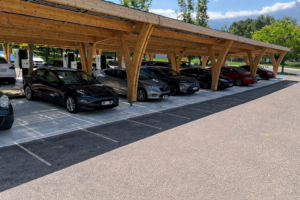
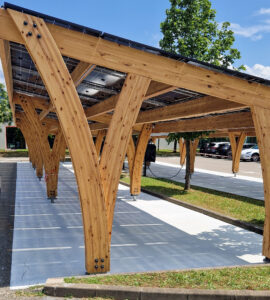
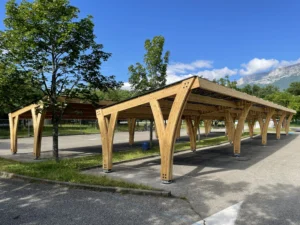
To live off-grid, you need to have sufficient energy sources to meet your energy needs. For example, if you have a solar carport, solar energy can be stored during daylight hours for use when the sun isn’t available. On sunny days, households can use the electricity generated directly from the solar panels. Any excess electricity produced is stored in batteries for later use.
At night, after the sun has set, stored electricity from the batteries can be used to power the home, enabling a comfortable lifestyle even off the traditional power grid.
By installing a small-scale wind turbine such as the Dalifant or Dali, you can ensure a more consistent supply of energy around the clock, since you are not dependent on sunlight.
Energy storage
To maintain a continuous power supply, you’ll need several rechargeable batteries. During the winter months, when solar power is limited, you may need a backup power source to ensure a constant supply of electricity unless you have a small-scale wind turbine.
What are the benefits of living off the grid?
Greater self-sufficiency and independence from the conventional power grid are among the main advantages of living off-grid. You avoid grid fees and utility costs and become self-sufficient in electricity production.
Are there any downsides to living off the grid?
The upfront costs of setting up a complete off-grid system can be high, but it may be worth it to ensure a reliable power supply even during outages. With Studer Next3, you can also choose when you want to be off-grid or on-grid.
Conclusion
Living off-grid offers the opportunity to become more self-sufficient and reduce your environmental impact. By installing a high-quality hybrid inverter in your system, you can be sure that you’ll always have access to grid power when needed and that you can go off-grid when there’s no demand for electricity. Click here to learn more about the Studer Next3.
Innoventum's off-grid solutions
Do you want to become completely self-sufficient and live off the grid? We’ll help you find a great solution that fits your specific needs. Contact us today.